9 min read
A New Start for My Personal Website
After a long pause, I decided to give my personal website a new foundation. This was not only a visual redesign, but also a move to Laravel Filament, a simpler administration experience, and a better setup for writing more regularly again.
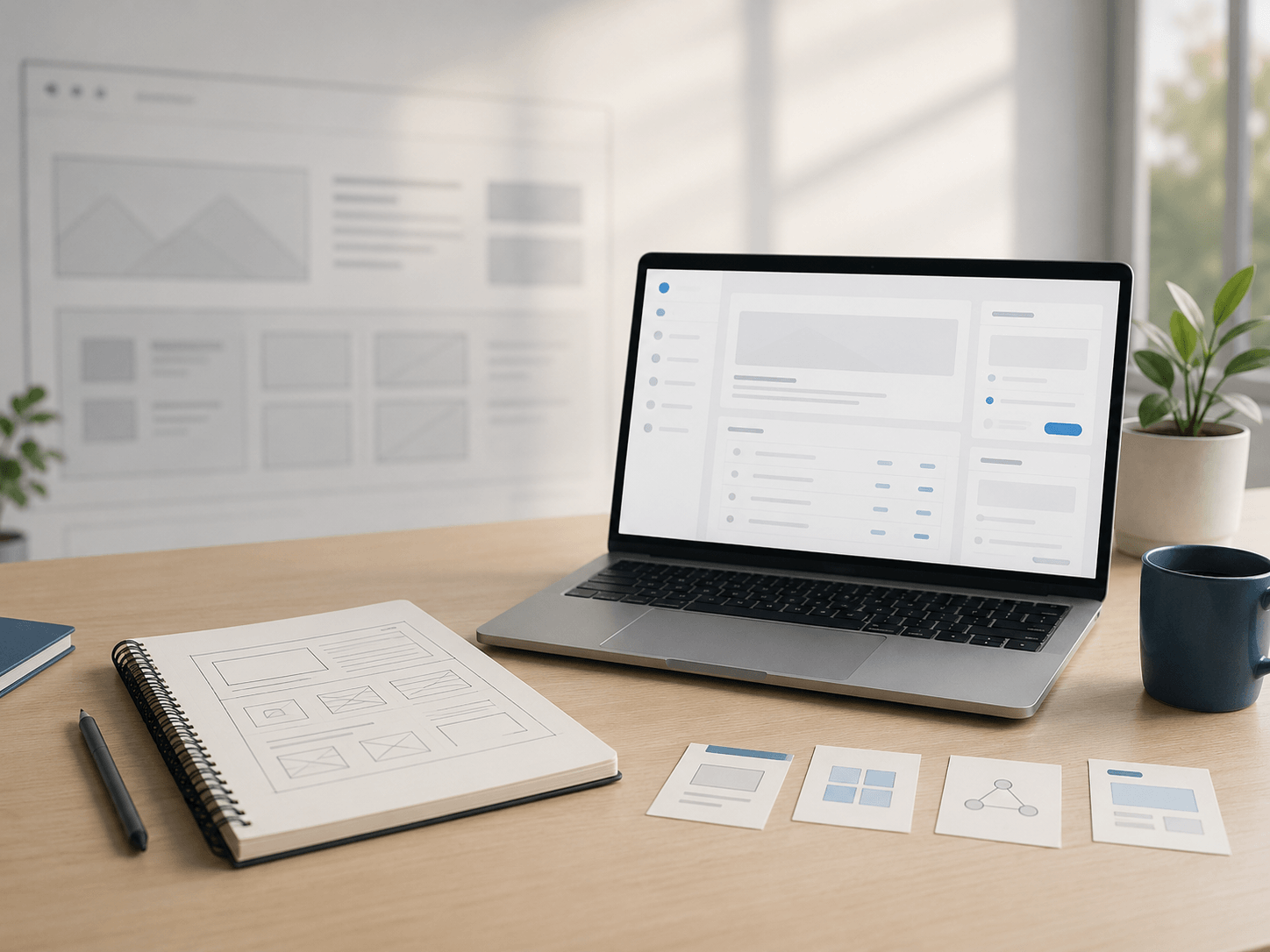
Over the last few weeks, I kept coming back to a thought that had been sitting in the background for quite some time. A personal website is not just a place where you occasionally put a few links, a short bio, and a list of technologies. For someone who builds web applications, works on products, writes code, and thinks about long-term maintainability, it becomes a public piece of context. It shows what I work on, how I think, and whether the version of me that people can find online is still current.
The previous version of my website was not bad. It made sense when it was built, it had a custom administration, and it did the job for a while. But projects change, technologies change, and the way I want to present my work has changed as well. Some parts of the website stayed untouched for too long, and over time they started to feel more like an archive than a living personal space. When I looked at it from the perspective of someone who had never met me before, it became clear that it no longer explained my current direction well enough.
Why now
The immediate reason was not only the feeling that the website needed a new visual design. A much stronger impulse came from LaraDep, a project I am currently working on. With a project like that, it is natural that some visitors or potential customers may want to check who is behind it. If they arrive at my personal website from there, they should see something that feels current, clear, and trustworthy. They should not land on an old historical version of a personal site that has not been seriously updated for years.
LaraDep is not just another item in a portfolio list for me. It is an attempt to build a product with a clearer purpose, a real audience, and a practical use case for developers and teams. That made it more important to clean up my own public presence as well. Not as a marketing facade, but as a place that explains my background, technical experience, and way of thinking. If someone comes from LaraDep, the personal website should help them understand who is behind the project instead of making them wonder whether the site has been forgotten.
There was also a very practical reason. I had stopped writing blog posts for a while. Not because I had no topics, but because publishing had become too heavy. When the administration of a website creates friction, even good ideas get postponed. A postponed idea often turns into an unfinished draft, a note in an app, or just a thought that disappears between other tasks. I wanted to remove that friction.
Moving to Laravel Filament
One of the main decisions was to rebuild the personal website on Laravel Filament. For me, this was not simply replacing one admin interface with another. Filament gives me a strong foundation for managing content without repeatedly rebuilding common administration features from scratch. Forms, tables, filters, validation, translations, media handling, and relationships between content types are things I want to rely on, not things I want to keep reinventing for a personal website.
The previous custom administration worked in the context in which it was created. It was not a failed solution. The issue is that every custom solution becomes something you carry forward. When requirements change, when a new content type appears, or when a small field needs to be adjusted, you have to return to the old code and maintain decisions that may no longer be worth owning. Filament changes that balance. It lets me focus more on the actual content and less on rebuilding the same administrative foundations again.
A personal website is a good place for this kind of pragmatic decision. I do not need to prove that I can write every button and every table by hand. I need a system that is pleasant to use, clear to maintain, and fast enough when I want to edit a page, add a tool, update a reference, or write a new article. Laravel Filament fits that scenario very well.
The redesign was not only visual
From the outside, a redesign is usually noticed through the visual layer first. Layout, typography, navigation, colors, component details, and the general feeling of the website change. But for this project, the more important change happened below the surface. I wanted the structure of the website to reflect what actually belongs there now: pages, references, tech stack, tools, blog posts, translations, SEO metadata, and content that can grow over time without becoming messy.
The new version should be easier to manage, but also richer in information. That combination cannot be solved by a nicer layout alone. It needs better content models, a better administration experience, clearer translation handling, and a way for each section to evolve. Otherwise a redesign looks good for a few months and then starts aging in the same way the previous version did. I wanted a foundation that I would not want to throw away again after a short time.
This also reminded me that a personal website is only a small project on the surface. Underneath, it still contains many of the same decisions that larger websites and applications have to deal with: multilingual content, excerpts, page structure, tool descriptions, SEO fields, internal consistency, and editor experience. The scale is smaller, but the principles are very similar.
A simpler path back to writing
One of the things I expect the most from the new website is a return to writing. I do not want to make a large promise about a strict publishing schedule. The more useful goal is to remove the barriers that made me stop publishing in the first place. If I have an idea related to development, operations, AI, Laravel, product thinking, or building my own projects, I want to be able to open the administration, write a draft, add a translation, and save it without feeling that the publishing process itself has become another technical task.
Writing has several roles for me. It helps me organize my own thinking, record decisions I have made, and share experience that may be useful to someone else. Often a problem that feels specific to one project is not that unique at all. When it is described with enough context, it can shorten someone else's path or at least show a different way to approach a similar situation.
The new administration should help with that in a very practical way. When a writing system is comfortable, short notes are less likely to be postponed. And sometimes a short note becomes an article that would otherwise never be written. That matters more to me than the redesign itself. Visitors will see the visual result first, but the long-term value will depend on whether the website helps me work with content more consistently.
A personal website as living context
I do not want to treat a personal website as a static business card. Static cards get outdated quickly, especially when projects, technologies, and priorities keep changing. I prefer to think of it as living context: a place where people can see what I am working on, which technologies I use, which tools I find useful, what I have done before, and where my attention is moving next.
This matters because many professional and product-related decisions happen before the first message or call. Someone finds a project, a reference, a blog post, or a tool, and only then starts forming a picture of the person behind it. If that picture is outdated, it creates unnecessary noise. The new website should reduce that noise. It does not need to answer everything, but it should give a faster and more accurate first impression.
At the same time, I do not want the website to feel like a polished but empty presentation. I would rather have it reflect real work, decisions, trade-offs, and gradual progress. That means I also want to write about topics that are not only final success stories. Compromises, technical debt, simplifications, wrong turns, and decisions that only prove themselves later can be more useful than generic marketing statements.
AI as part of the process
The new version of the website was also built with significant help from AI. I do not see that as a side note. It is becoming part of how I work. AI helps me iterate faster, keep context, prepare text, review structure, and move through tasks that would previously take more focused time. The responsibility still stays with me. I still need to make decisions, review the result, and correct the direction. But it is difficult to ignore how much the pace of this kind of work is changing.
On this personal website, that became visible in a practical way. It was not only about generating text or filling a few fields. It was an ongoing collaboration around page structure, excerpts, tool descriptions, translations, administration, and consistency. AI in that process is not a replacement for direction. It is more like a very fast collaborator that can expand decisions, but still needs guidance, correction, and clear intent.
This is also a topic I want to write about more. Not in the abstract sense that AI will change everything, but in the everyday work of a developer and product builder. Where does it really save time? Where does it create extra review work? How should prompts and tasks be shaped so that the output is not only fast, but usable? Those are the kinds of practical questions I want to explore on the new website.
What comes next
I do not see the new website as a finished monument. It is a new foundation. Some parts will continue to change, grow, and become more precise. I want to keep the tech stack up to date, add tools, expand references, and return to writing. Not everything has to be finished at once. The important thing is that the website can now be maintained without unnecessary effort and without discouraging small, regular updates.
That is the biggest difference from the previous version. I had a website that technically worked, but it did not invite me to return to it often. The new version should do the opposite. It should be a place where it makes sense to add notes from practice, short lessons, and longer articles. A place that does not just sit on a domain, but grows with the work I am doing.
A new start for my personal website therefore does not mean cutting off the past. It means clearing away old layers, keeping what still makes sense, and creating room for the next stage. If the simpler administration helps me write more often, document my work better, and offer a more current view of projects like LaraDep, then the redesign will have achieved its purpose. And if this first post becomes the start of more regular writing, that may be the most important result of the whole change.
