Asana
Asana makes sense as a work organization tool when tasks can no longer live only in someone’s head, email, or a loose spreadsheet. It fits teams that need to connect tasks, projects, deadlines, and simple workflows without a heavy methodology. Its biggest value appears when the team uses clear rules and the tool supports work instead of becoming another place for chaos.
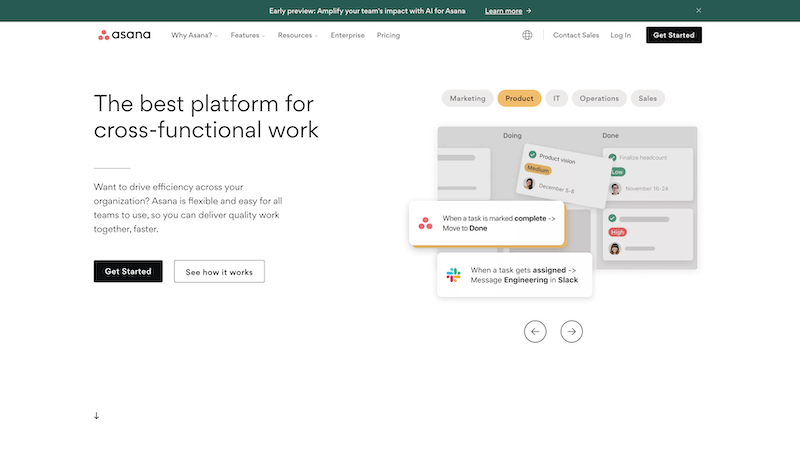
Asana should help organize work, not make it heavier. In project management, it is easy to confuse activity inside a tool with actual project progress.
That is why I always look at whether the team knows what belongs in the tool, who owns each task, and how done is defined. Without those rules, even a good interface will not help.
Where it makes sense
Asana fits marketing, product, or operations teams that need to see who is working on what and what should be finished next.
It fits teams that need to connect tasks, projects, deadlines, and simple workflows without a heavy methodology.
Tasks and ownership
A good project tool needs to make ownership visible. A task list is not enough; each task needs an owner, status, priority, and a clear next step.
Without that, the team only moves confusion from email into another application.
Team rhythm
The tool works best when it fits a regular rhythm: planning, review, closing tasks, and evaluating what happened.
If people return to it only randomly, data becomes stale and trust in the whole system drops.
What to watch out for
The risk is creating too many projects, fields, and rules. Then the team spends more time managing the system than doing the work.
With Asana, the important part is not starting with the tool itself. The team first needs a clear way of working, and only then does it make sense to tune the workflow.
hub Related tools
Explore similar tools
A random selection of tools from the same category.
Notion
Notion helps organize work so tasks, ownership, and deadlines are not scattered across email, chat, and notes. It fits teams that need to connect knowledge and work: documents, processes, content plans, lightweight CRM views, or internal wikis. It makes the most sense when the team keeps simple rules and uses the tool as a shared source of truth for work.
Wrike
Wrike helps organize work so tasks, ownership, and deadlines are not scattered across email, chat, and notes. It fits larger teams, marketing operations, agencies, or organizations where multiple types of work and approvals meet. It makes the most sense when the team keeps simple rules and uses the tool as a shared source of truth for work.
Monday
Monday helps organize work so tasks, ownership, and deadlines are not scattered across email, chat, and notes. It fits teams that need more flexibility than a basic task manager and want to adapt work views to their process. It makes the most sense when the team keeps simple rules and uses the tool as a shared source of truth for work.
add_circle Missing a tool?
Suggest a tool for the list
If you could not find a useful tool here, send me its name and URL. I will review it and consider adding it to the public catalog.
