Pingdom
Pingdom is useful for straightforward uptime and speed monitoring. It helps quickly detect whether a website is running, how long it takes to respond, and when an outage happened. Its biggest value appears when you do not want to rely on customers noticing the problem first.
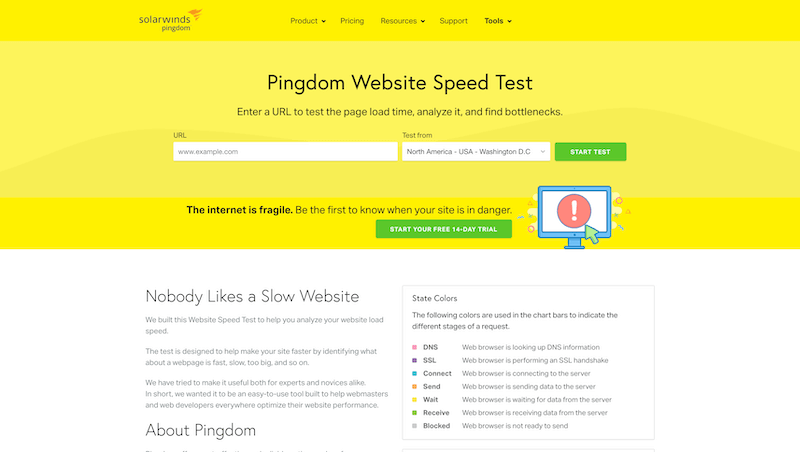
Pingdom is a practical tool for basic operational confidence. It is not a replacement for complex monitoring, but it quickly answers a simple question: is the website up and responding reasonably fast?
That matters more than it may seem. If you learn about an outage from a customer first, monitoring has already failed. Pingdom helps catch the problem earlier and gives it a timeline.
Availability without guessing
Uptime monitoring checks regularly whether the site responds. When an outage happens, the team gets a concrete signal instead of a vague feeling that something went wrong.
This is useful especially for websites where even a short outage means lost orders, leads, or trust.
Response time as a signal
Besides availability, response time is worth watching. A website can be technically online, but if it responds too slowly, users experience it almost like an outage.
Response time trends can reveal hosting, database, or external service issues before they become full incidents.
Alerts and ownership
Monitoring has value only when someone reacts. Alerts need to reach the right people and it must be clear what should happen during an outage.
If notifications go to everyone and nobody owns them, the team eventually ignores them. Fewer alerts with clear ownership are better.
What to watch out for
Pingdom can show that availability or response time is a problem, but it may not explain the exact cause. Deeper diagnosis needs logs, APM, or server monitoring.
As a first monitoring layer, it is very useful. It gives the team basic confidence that they will know about an outage before users do.
hub Related tools
Explore similar tools
A random selection of tools from the same category.
Sklik
Sklik is Seznam’s advertising system and makes the most sense for the Czech market. It helps reach users in search, the content network, and other ad formats outside the Google ecosystem. Its biggest value appears when used as part of a local marketing mix, not as an automatic copy of Google Ads.

Collabim
I use Collabim mainly when data should lead to a practical decision, not just another report. It helps track rankings, keywords, competitors, and long-term organic visibility, especially in a local market context. It makes the most sense when results are reviewed regularly and connected to specific changes on the website or in campaigns.
Internet Archive (Wayback Machine)
I use Internet Archive (Wayback Machine) mainly when data should lead to a practical decision, not just another report. It helps inspect older versions of websites, recover lost content, verify changes over time, or understand how a site evolved. It makes the most sense when results are reviewed regularly and connected to specific changes on the website or in campaigns.
add_circle Missing a tool?
Suggest a tool for the list
If you could not find a useful tool here, send me its name and URL. I will review it and consider adding it to the public catalog.
