SimilarWeb
SimilarWeb helps estimate traffic, acquisition sources, and the competitive position of websites or digital products. It is useful for market comparison, competitor benchmarking, and channel orientation. It makes the most sense as a strategic estimate, not as an exact replacement for first-party analytics.
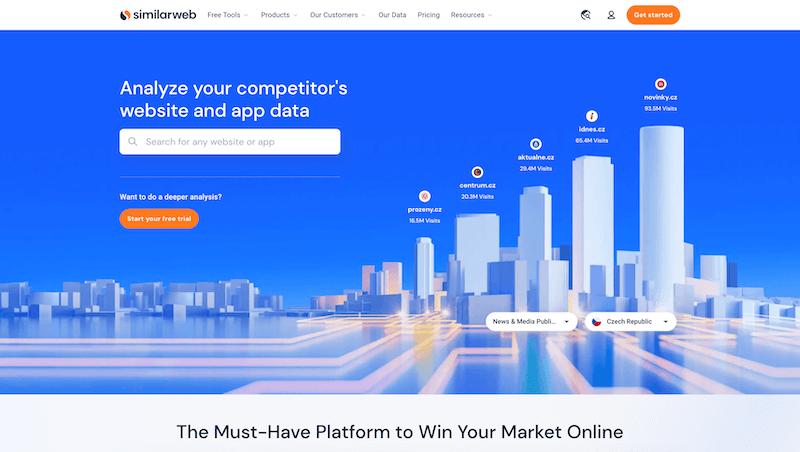
SimilarWeb is useful when I need a quick view of a market or competitor without access to their analytics.
It should be treated as an estimate. That does not make it useless. For strategic comparison, an estimate can be very valuable as long as it is not treated like exact accounting.
Competitor benchmarking
Exact competitor data is usually unavailable. SimilarWeb helps estimate traffic, channels, and the relative strength of different players.
That can support expansion planning, content strategy, or marketing budget decisions.
Channels and sources
Traffic source data shows whether competitors rely mainly on search, ads, direct traffic, referrals, or social networks.
This helps understand where the market is active and where there may be space for growth.
Market context
SimilarWeb is practical for comparing several websites quickly. The value is not only one number, but relative position and change over time.
The trend matters: who grows, who stagnates, and how channel structure changes.
What to watch out for
The data is modeled and may be less accurate for smaller websites or specific markets.
SimilarWeb is good for orientation and benchmarking, but decisions should also combine internal data, research, and market knowledge.
hub Related tools
Explore similar tools
A random selection of tools from the same category.
Google Analytics
I use Google Analytics mainly when data should lead to a practical decision, not just another report. It helps track traffic, sources, events, conversions, and user behavior so a website is not evaluated only by feeling. It makes the most sense when results are reviewed regularly and connected to specific changes on the website or in campaigns.
PageSpeed Insights
I use PageSpeed Insights as a quick entry point into website performance. It does not explain everything, but it shows Core Web Vitals, lab data, and specific recommendations that can affect speed and user experience. It makes the most sense when results are not treated as a score chase, but as input for real improvement.

Google Ads
I use Google Ads mainly when data should lead to a practical decision, not just another report. It helps manage search, display, shopping, or video campaigns and evaluate which queries, audiences, and creatives bring return. It makes the most sense when results are reviewed regularly and connected to specific changes on the website or in campaigns.
add_circle Missing a tool?
Suggest a tool for the list
If you could not find a useful tool here, send me its name and URL. I will review it and consider adding it to the public catalog.
