Laravel
Tools and packages for the Laravel framework
13 tools
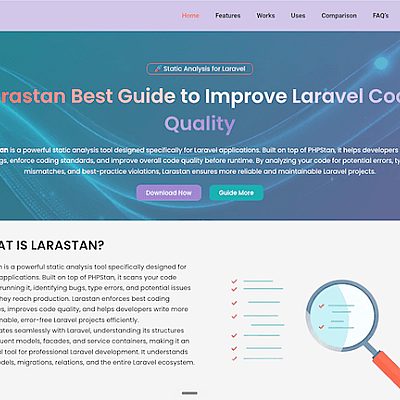
Larastan
I use Larastan as a way to bring static analysis into a Laravel project without ignoring Eloquent, facades, and the dynamic parts of the framework. It does not replace tests or review, but it can catch type errors, incorrect return values, and small problems that would otherwise appear only when the application is running.
Rector
I see Rector as a tool for the point where manual refactoring stops making economic sense. It can scan a PHP codebase, apply mechanical changes, and help with language or framework upgrades without forcing a developer to hand-edit thousands of tiny details. Its real value appears when it is part of a controlled process, not blind automatic rewriting.
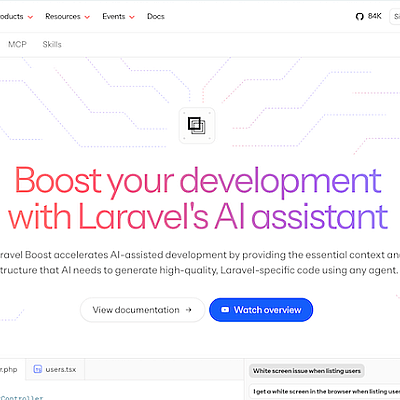
Laravel Boost
Laravel Boost starts to make sense when an AI agent should stop answering in general terms and work with a real Laravel application instead. It helps the agent understand package versions, routes, database schema, configuration, and documentation, so suggestions are less detached from the project. It is still only support for the developer, but in a larger codebase it can remove a lot of manual lookup work.
Spatie
Spatie is best known for its long-maintained PHP and Laravel packages. In practice, I see it as a source of proven solutions for recurring problems: permissions, media handling, activity logs, backups, data objects, webhooks, and other application concerns. The value is not installing everything, but choosing the package that truly simplifies the project.
Sentry
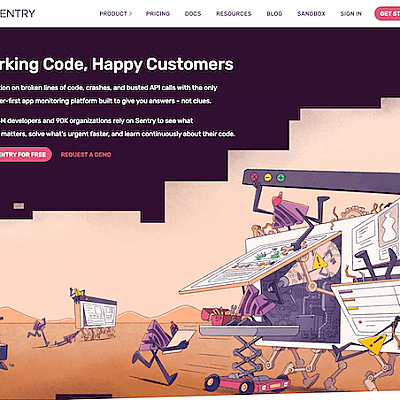
Sentry helps monitor application errors and performance so a production problem does not remain just a line somewhere in a log file. It shows exception context, affected users, release, environment, and error frequency, making it easier to decide what is truly critical. Its real value appears when issues are actively triaged and fixed, not only collected.
Pest PHP
Pest PHP is a modern testing framework for PHP with a simple and readable syntax. It is not only a nicer way to write tests, but a tool that lowers the friction of testing regularly and fits naturally into the Laravel ecosystem. It helps most when tests are a normal part of development, not a separate chore at the end.
Laravel Telescope
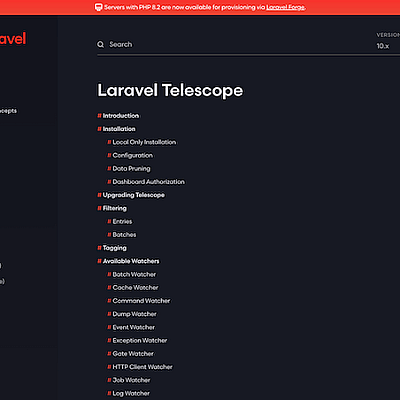
Laravel Telescope is a developer diagnostic tool for Laravel applications. It helps inspect requests, database queries, exceptions, logs, jobs, mail, cache operations, and other events happening inside the app. It makes the most sense during local development and debugging, when you need to understand behavior quickly without digging through logs manually.
Laravel Sanctum
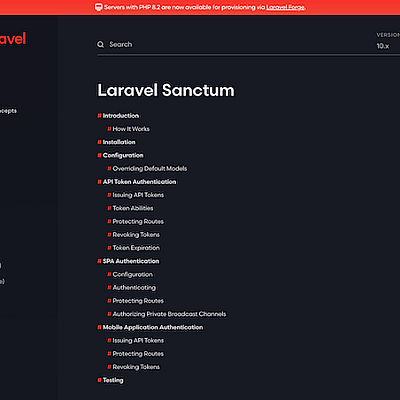
Laravel Sanctum is a lighter authentication solution for Laravel applications that need to protect SPAs, mobile apps, or simple token-based APIs. Its strength is not replacing OAuth in every scenario, but practicality: it supports session authentication for first-party SPAs and personal API tokens with abilities for simpler integrations.
Laravel Sail
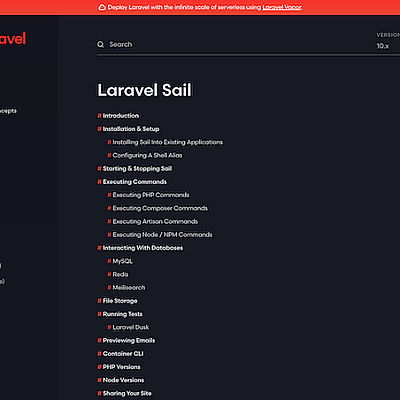
Laravel Sail is the official Docker development environment for Laravel. It helps run the application, database, cache, and other services without manually installing the whole stack on a developer machine. It makes the most sense when you want a fast project start and a consistent local environment across the team.
Laravel Pint
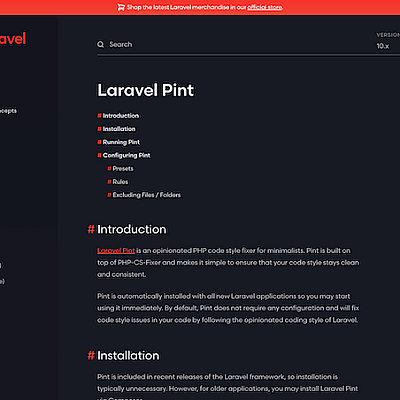
Laravel Pint solves one quiet but important problem: the team no longer has to keep discussing PHP code formatting. It is built on top of PHP-CS-Fixer, ships with sensible Laravel defaults, and works well both for local fixes and CI checks. Its biggest value appears when code style stops being a code review topic.
Laravel Livewire
Laravel Livewire lets you build interactive interfaces while keeping most of the logic close to Laravel. It fits forms, filters, tables, admin screens, and product areas where you do not want to build a separate frontend application for every interaction. Its biggest value appears when components stay small and clearly bounded.
Laravel Jetstream
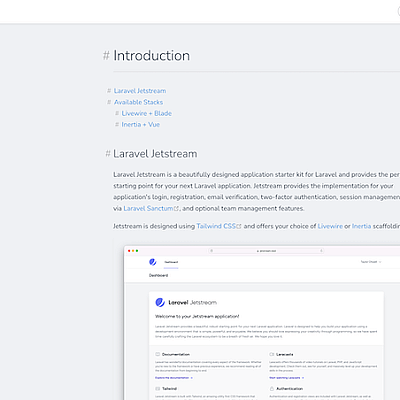
Laravel Jetstream is a starter kit for Laravel applications that need a ready-made foundation for login, registration, user profiles, two-factor authentication, session management, and optionally teams. It makes the most sense when you do not want to rebuild common application infrastructure from scratch, but still want to stay in the Laravel ecosystem and keep control over the result.
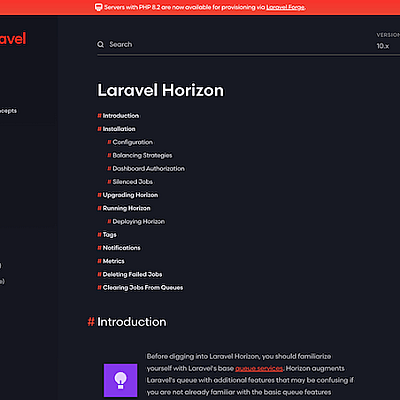
Laravel Horizon
Laravel Horizon is a practical layer on top of Redis queues in Laravel. It helps monitor job throughput, failures, runtime, and worker configuration, so queues are not just a process running somewhere on a server, but a part of the application you can actually observe and manage. It makes the most sense in projects where queues are used regularly and their state affects production.
add_circle Missing a tool?
Suggest a tool for the list
If you could not find a useful tool here, send me its name and URL. I will review it and consider adding it to the public catalog.
